- Length
- 690 pages
- Practice questions
- 1,164
- Mock · 225 min
- 125 Q
Study guide · 2026 edition
Series 7 Study Guide (2026)
Written chapter by chapter for the Series 7 exam, with every practice question explained and the working shown.
- Format
- PDF + EPUB
- Length
- 690 pages
- Practice questions in the book
- 1,164
- File last updated
- October 2026
- Delivery
- Instant download after payment
Your options for this exam
- Study guide$24.99You are looking at this one
- Cheat sheet$9.99See what is inside
- BundleGuide + cheat sheet$29.99Save $4.99 vs buying separately
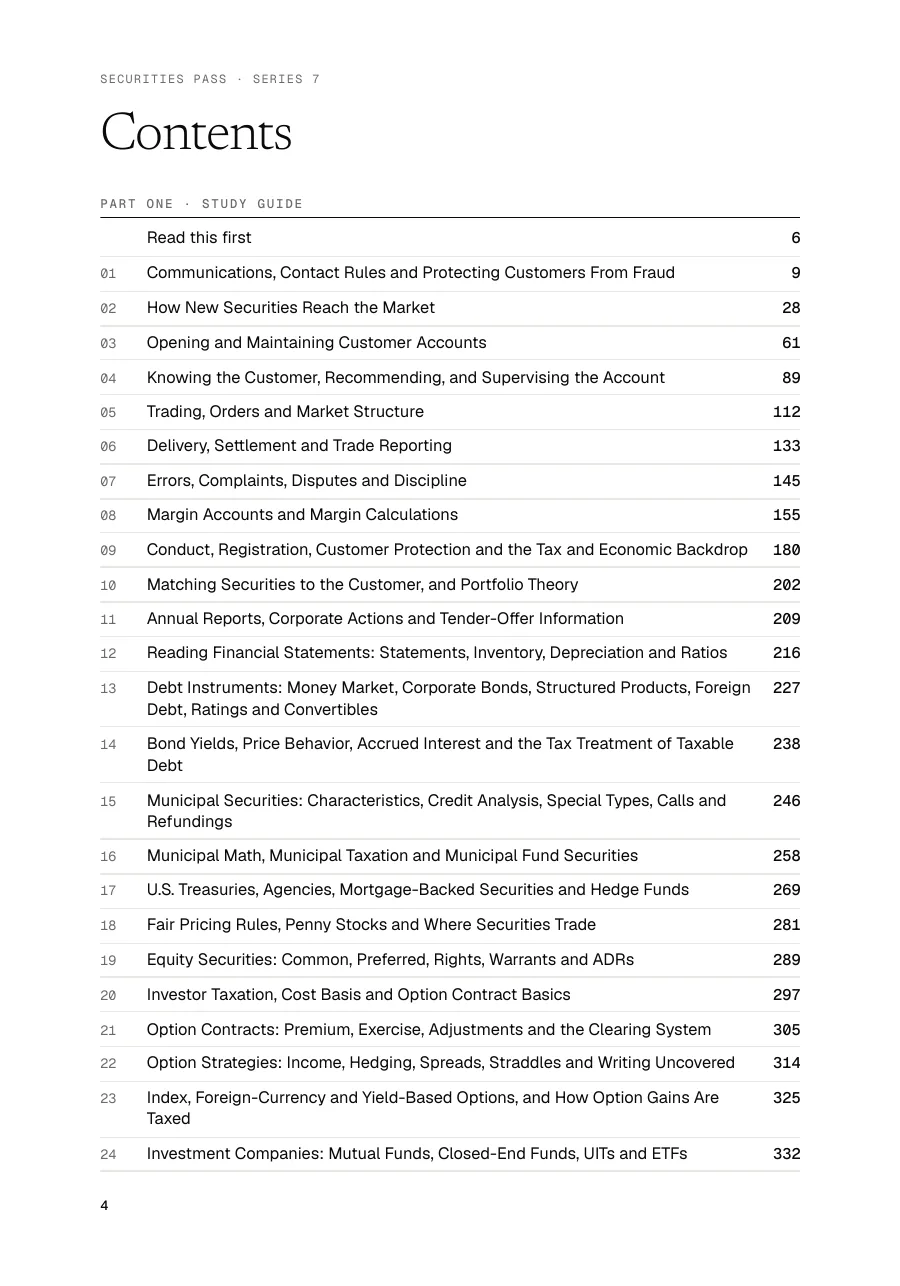
Contents
| Ch. | Chapter |
|---|---|
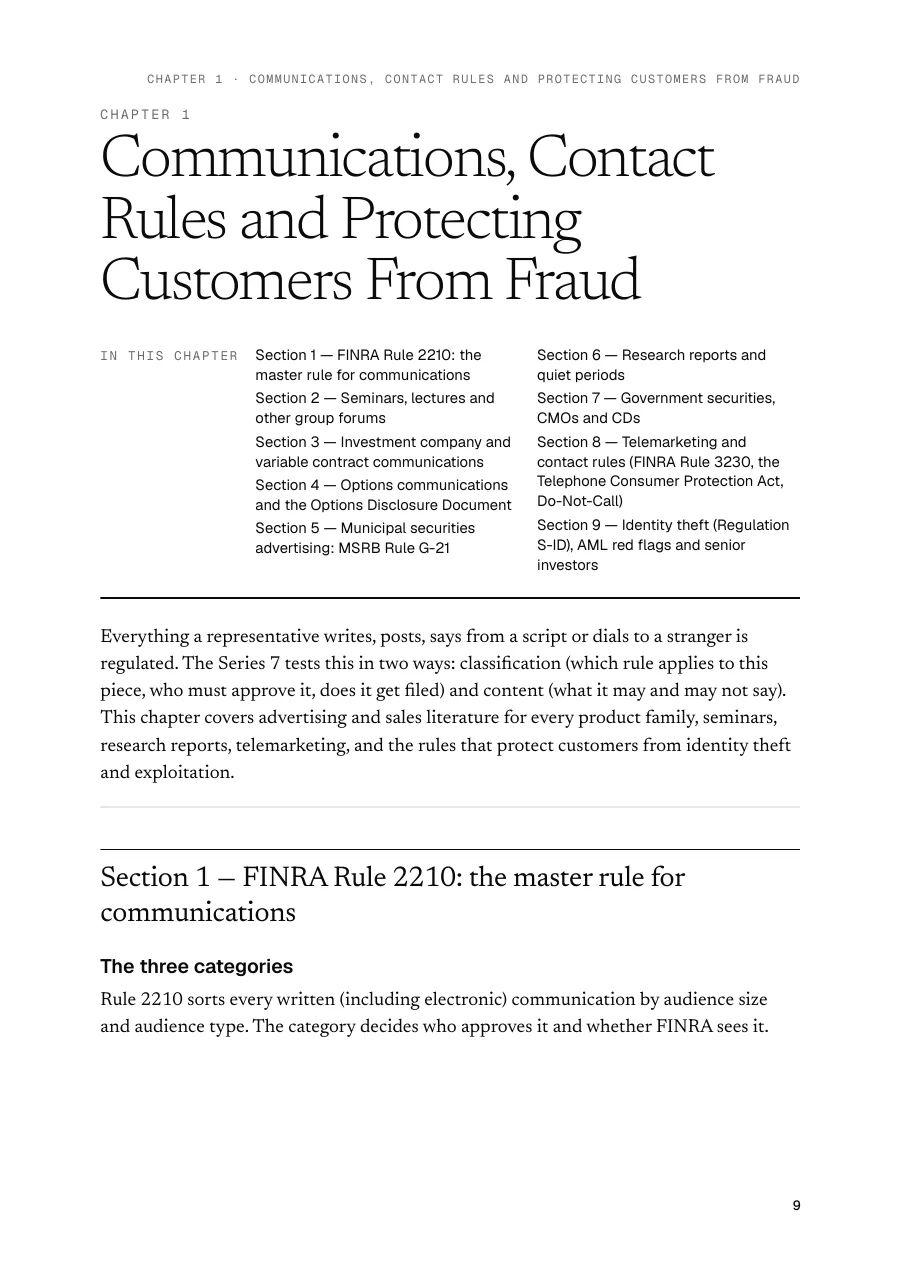
| 01 | Communications, Contact Rules and Protecting Customers From Fraud |
| 02 | How New Securities Reach the Market |
| 03 | Opening and Maintaining Customer Accounts |
| 04 | Knowing the Customer, Recommending, and Supervising the Account |
| 05 | Trading, Orders and Market Structure |
| 06 | Delivery, Settlement and Trade Reporting |
| 07 | Errors, Complaints, Disputes and Discipline |
| 08 | Margin Accounts and Margin Calculations Free sample |
| 09 | Conduct, Registration, Customer Protection and the Tax and Economic Backdrop |
| 10 | Matching Securities to the Customer, and Portfolio Theory |
| 11 | Annual Reports, Corporate Actions and Tender-Offer Information |
| 12 | Reading Financial Statements: Statements, Inventory, Depreciation and Ratios |
| 13 | Debt Instruments: Money Market, Corporate Bonds, Structured Products, Foreign Debt, Ratings and Convertibles |
| 14 | Bond Yields, Price Behavior, Accrued Interest and the Tax Treatment of Taxable Debt |
| 15 | Municipal Securities: Characteristics, Credit Analysis, Special Types, Calls and Refundings |
| 16 | Municipal Math, Municipal Taxation and Municipal Fund Securities |
| 17 | U.S. Treasuries, Agencies, Mortgage-Backed Securities and Hedge Funds |
| 18 | Fair Pricing Rules, Penny Stocks and Where Securities Trade |
| 19 | Equity Securities: Common, Preferred, Rights, Warrants and ADRs |
| 20 | Investor Taxation, Cost Basis and Option Contract Basics |
| 21 | Option Contracts: Premium, Exercise, Adjustments and the Clearing System |
| 22 | Option Strategies: Income, Hedging, Spreads, Straddles and Writing Uncovered |
| 23 | Index, Foreign-Currency and Yield-Based Options, and How Option Gains Are Taxed |
| 24 | Investment Companies: Mutual Funds, Closed-End Funds, UITs and ETFs |
| 25 | Variable Annuities and Variable Life: Features, Valuation, Payout and Tax |
| 26 | Real Estate Investment Trusts and Direct Participation Programs |
| 27 | What the Customer Must Be Told: Disclosures, Risks, Returns, Costs and Protection of Older Clients |
| 28 | Gift and Estate Tax, and the Basis of Gifted and Inherited Securities |
| 29 | Reading the Market: Sentiment, Indexes, Municipal Indicators and Technical Analysis |
| 30 | Municipal Securities Disclosure: Official Statements, Continuing Disclosure and EMMA |
| 31 | Confirmations, Account Statements, Account Value, Profit and Loss, and Books and Records |
| 32 | Withdrawals and Tenders, Account Updates, Transfers Between Firms, and Closing an Account |
| 33 | Regulation FD and the Penny Stock Rules |
Chapter numbers are those printed in the book.
What’s inside
- Chapters in teaching order, written to the Series 7 content outline
- A question bank of 1,164 practice questions, grouped by topic, with answers and explanations
- Worked examples where the exam asks for arithmetic, and the traps named where candidates miss
- PDF (print and tab it) + EPUB (phone or e-reader)
Look inside
14 pages of the Series 7 guide, exactly as printed. Swipe, or use the arrow keys.

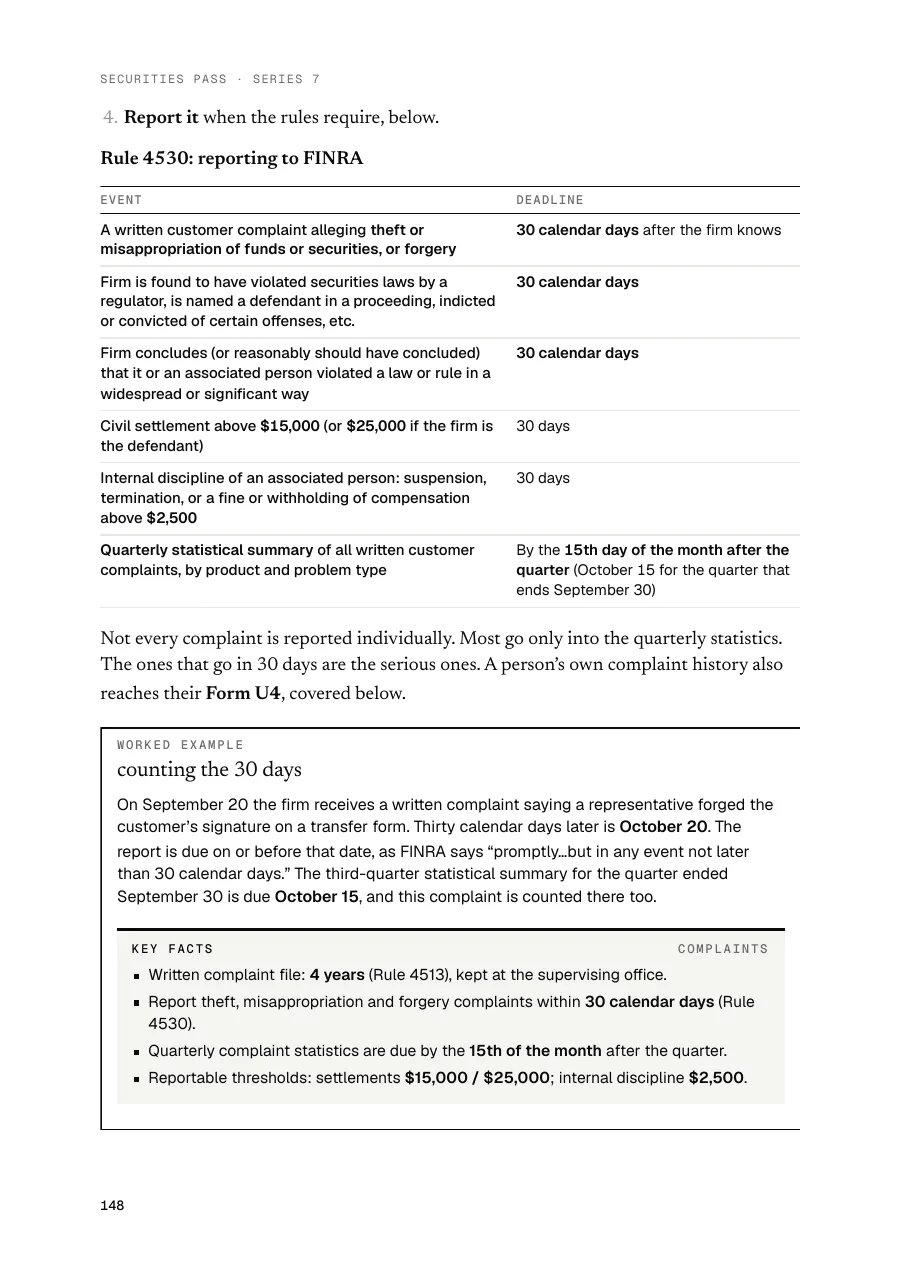

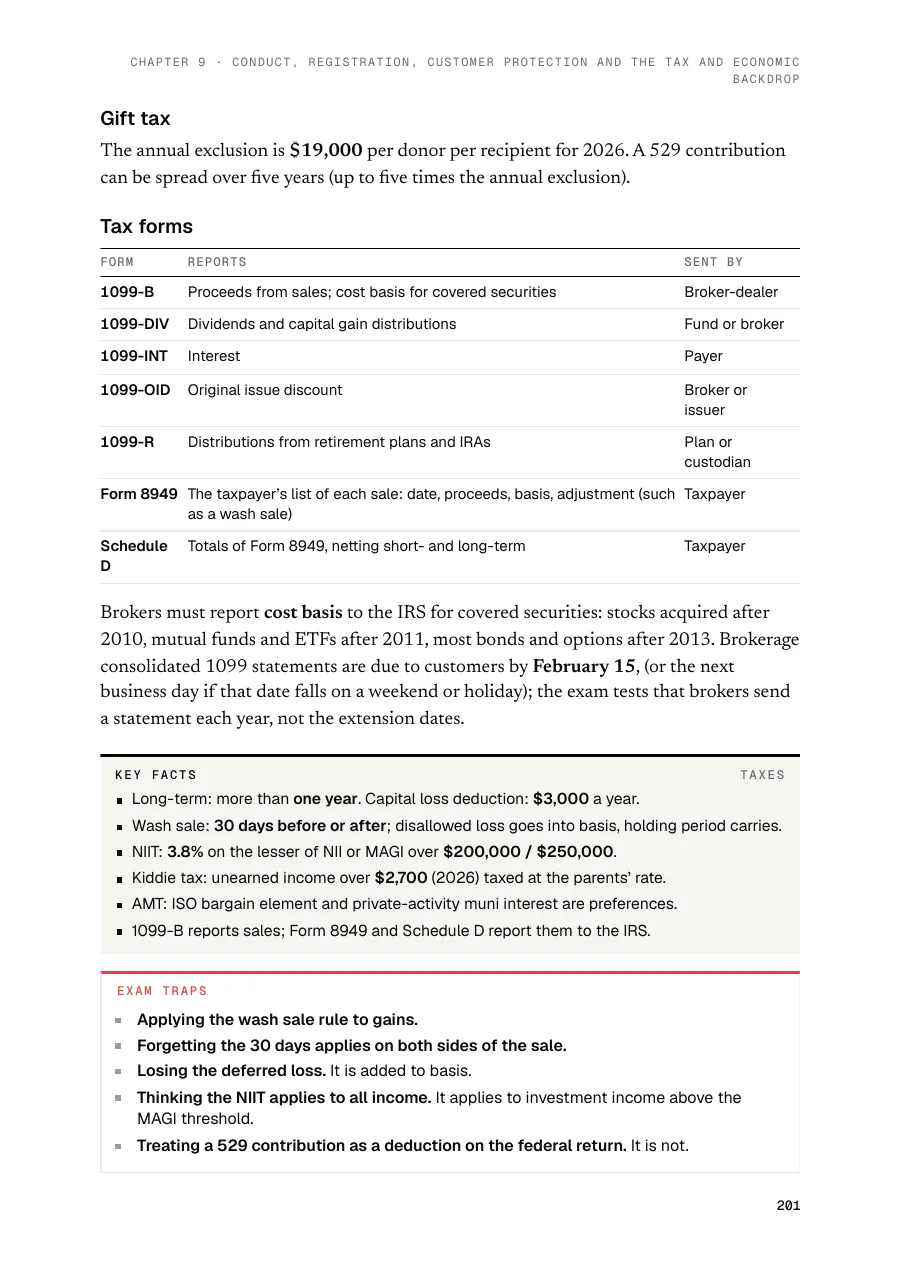

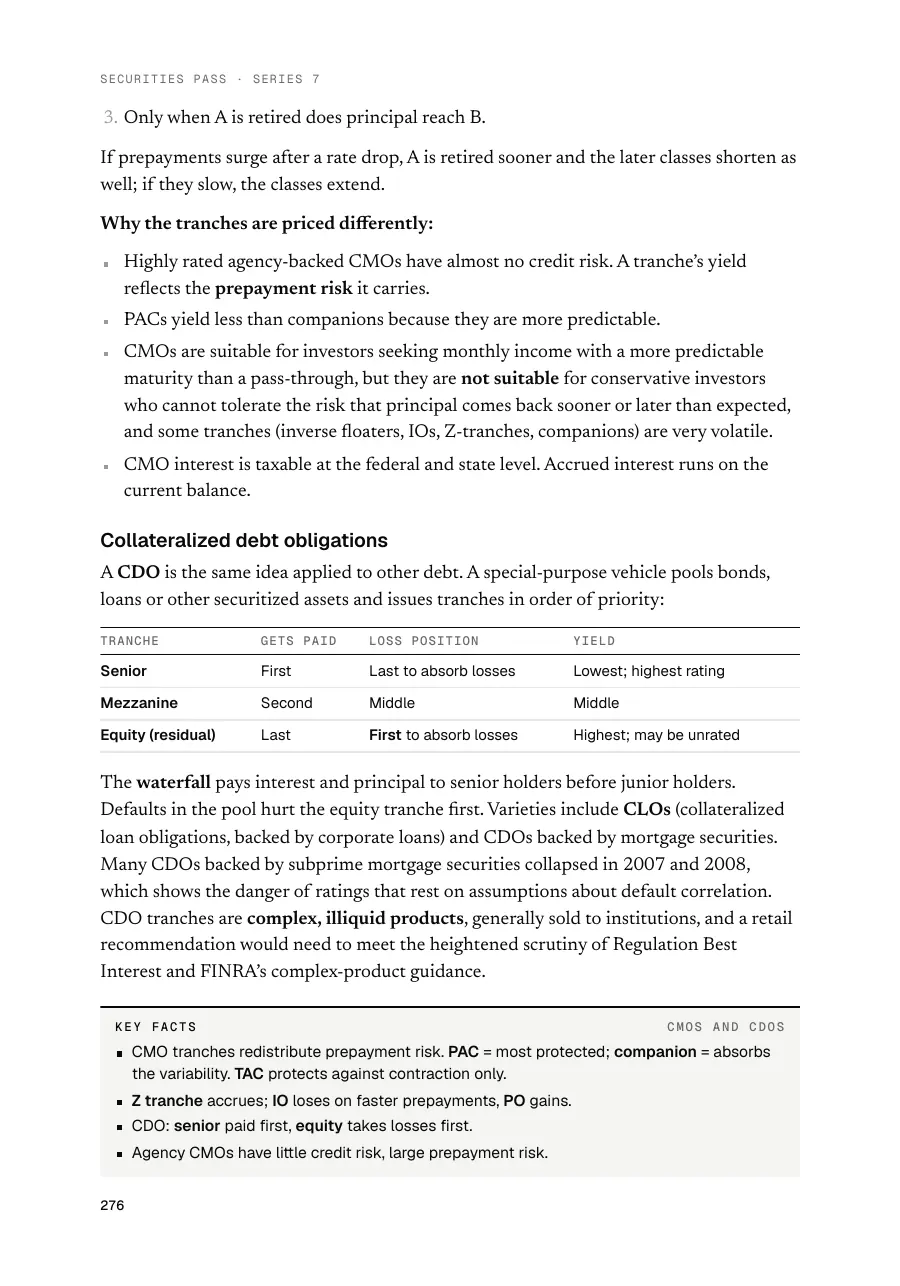
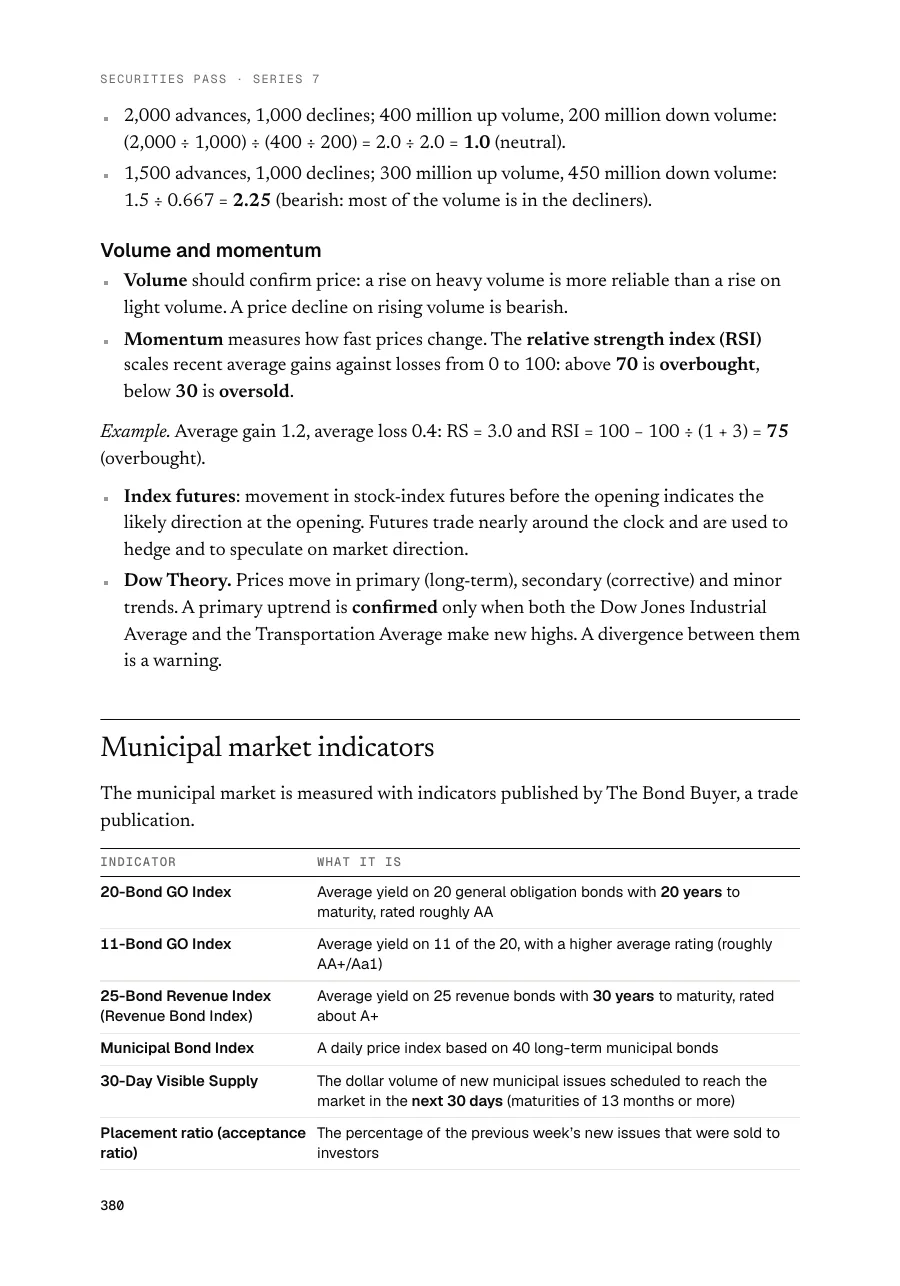


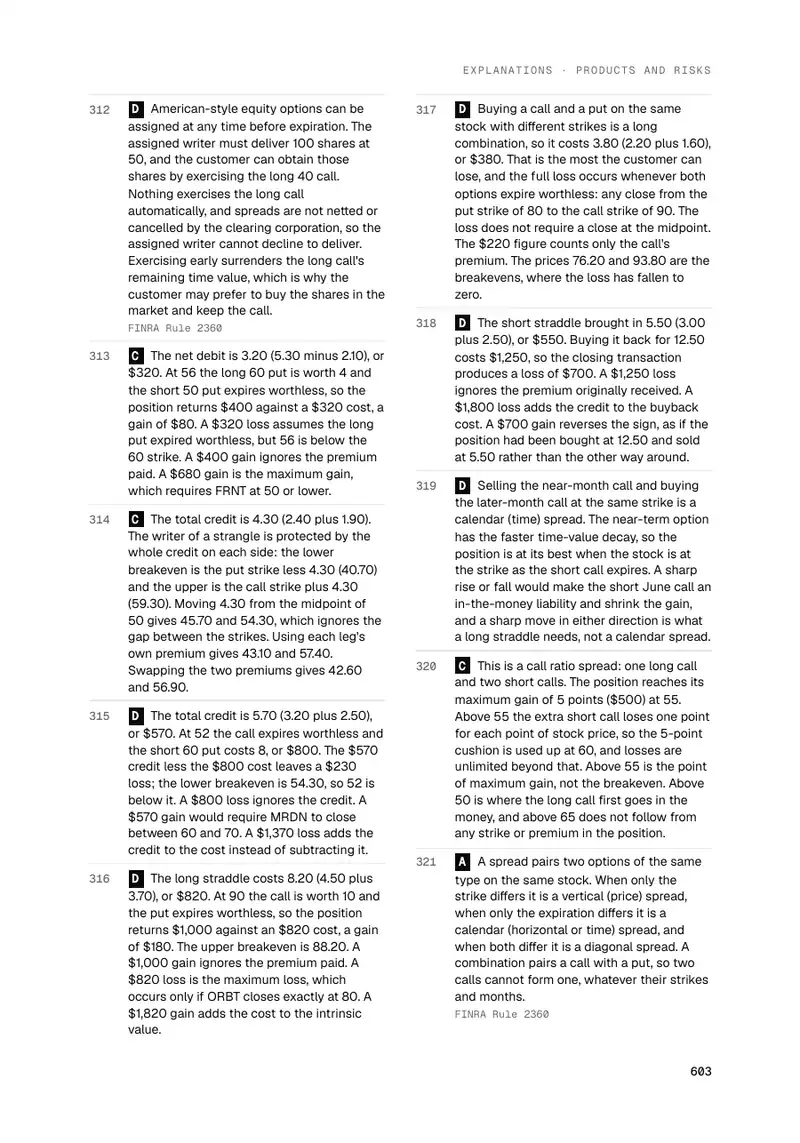
Free sample chapter
Chapter 8, as it appears in the book. No download and no email.
Margin is the most calculation-heavy corner of the Series 7 customer-accounts material, and the one where a candidate with a clear picture of three or four formulas can pick up points quickly. It is also where the rules overlap, so they are easy to mix up. Before any arithmetic, get the cast straight.
Who sets which number
Three different layers decide how much a customer must put up. Do not use one layer's number for another layer's job.
| Layer | Who writes it | What it controls | Typical number |
|---|---|---|---|
| Regulation T (12 CFR Part 220) | Federal Reserve Board | Initial margin: how much of a purchase or short sale the customer must fund, and how long the customer has to do it | 50% of the market value of a margin equity security; payment within a set number of days |
| FINRA Rule 4210 | FINRA | Maintenance margin and minimum equity: how much equity must stay in the account afterward | $2,000 to open; 25% long; 30% or $5 per share short |
| House rules | The individual firm | Whatever the firm wants on top of the first two | Often 30% to 40% long maintenance; the firm may raise it at any time without notice |
The firm must enforce the strictest of the three. A customer never gets the benefit of the loosest.
Two words need to be kept apart:
- Margin in the account-opening sense is the customer's own money (equity) put against a purchase.
- A margin account is an account in which the firm lends the rest. The loan is the debit balance, and the securities are the collateral.
Opening a margin account
The paperwork
A customer cannot simply start borrowing. Three agreements usually travel together in a single margin agreement package:
- Credit agreement. States the terms of the loan: how interest is charged, that the interest rate can change, and that the debit is secured by the securities. It also says the firm may require more collateral.
- Hypothecation agreement. The customer pledges the securities in the account as collateral for the loan. It allows the firm to re-pledge (rehypothecate) the securities to a bank to fund the loan, up to a limit of 140% of the customer's debit balance. Without this signature the firm cannot margin the account at all.
- Loan consent agreement. This one is optional for the customer. It lets the firm lend the customer's securities to other customers, usually to cover short sales. The customer can open a margin account without signing it.
The signed agreement is what makes the account a margin account. The hypothecation agreement is the one candidates are asked about most.
Rule 2264: the margin disclosure statement
Before or at the time a margin account is opened for a non-institutional customer, the firm must give the customer, individually and as a separate document (or alone on a separate page), the margin disclosure statement that FINRA Rule 2264 sets out word for word. A firm that lets customers open accounts or trade online must also post the statement on its website. After that the firm must deliver the statement, or the shorter set of bold disclosures from the rule, at least once a calendar year.
What the statement tells the customer, in its own words:
- You can lose more than you deposit.
- The firm can force the sale of securities in any of your accounts to meet a deficiency, and you are responsible for any shortfall left after the sale.
- The firm can sell your securities without contacting you first. Contacting you is a courtesy, not a requirement, even if the firm gave you a date.
- You do not get to choose which securities are sold.
- The firm can raise its house requirements at any time, with no advance written notice, and the change can take effect immediately.
- You have no right to an extension on a margin call.
A statement that gives the customer a right, such as the right to be notified, the right to pick what is sold, or the right to more time, contradicts the rules above.
Minimum equity and approval
FINRA requires a customer to have at least $2,000 of equity to open a margin account, or the full purchase price if the purchase costs less than $2,000. The $2,000 is a minimum on the account, not a minimum on each trade. The requirement is for equity, so it may be satisfied with cash or with securities valued at their market value.
The firm also decides whether this customer should have a margin account. Margin is a form of leverage, so the firm's principal approves the account after reviewing the customer's investment objectives, financial profile and experience. A customer who wants safety of principal and has little income is a poor fit for borrowing against a stock portfolio, even if the customer is willing to sign everything.
What can sit in a margin account, and what cannot
Regulation T lets a firm extend credit against a margin security. In practice:
| Margin-eligible (can be bought on margin) | Not eligible (must be paid in full) |
|---|---|
| Exchange-listed stocks and Nasdaq National Market stocks | Most OTC stocks not on the Federal Reserve's list of OTC margin stocks |
| OTC stocks on the Federal Reserve's list of OTC margin stocks | Penny stocks (usually treated as non-marginable by firms) |
| Open-end mutual fund and unit investment trust shares (margin securities under Regulation T, but see the 30-day point below) | Fund shares bought through a firm that sold them in the offering, until 30 days have passed |
| Corporate bonds, convertible bonds and Treasury and municipal securities (with their own, lower percentages, below) | New issues bought from a firm that took part in the distribution, for 30 days after the offering |
| ADRs of eligible foreign stocks | Long options with 9 months or less to expiration (paid in full) |
| Securities in a cash-only retirement account (an IRA cannot be margined) |
Non-marginable securities can still be bought through a margin account. The customer pays 100% of the price. The firm gives them no loan value. Two points matter for the exam:
- A purchase of a non-marginable security requires a full cash payment, not 50%.
- A security that is not a margin security cannot be used as collateral. It adds to the account's market value for no purpose except to be the thing the customer paid for in full.
Product-specific margin
Regulation T's 50% applies to margin equity securities. FINRA has its own, much lower, minimums for exempted securities because they are far less volatile. Regulation T leaves the initial requirement on exempted securities to the creditor's good faith judgment, subject to any higher percentage set by the regulator, so the numbers below are FINRA maintenance minimums.
| Position | FINRA maintenance requirement (long or short) |
|---|---|
| Municipal bonds (exempted securities other than U.S. government obligations) | 7% of current market value |
| U.S. government securities, less than 1 year to maturity | 1% of current market value |
| 1 year to less than 3 years | 2% |
| 3 years to less than 5 years | 3% |
| 5 years to less than 10 years | 4% |
| 10 years to less than 20 years | 5% |
| 20 years or more | 6% |
| Zero-coupon bonds with 5 years or more to maturity | not less than 3% of the principal amount |
The Treasury percentage depends on the remaining life, not on the original life of the bond. A 30-year Treasury bond with 8 years left falls in the 5-to-10-year bracket and carries 4%.
Calculations:
- $100,000 market value of a Treasury with 12 years left: 5% x $100,000 = $5,000.
- $100,000 market value of municipal bonds: 7% x $100,000 = $7,000.
- $250,000 market value of a Treasury with 4 years left: 3% x $250,000 = $7,500.
Other products:
- Mutual fund shares. Regulation T counts shares of open-end investment companies and unit investment trusts registered under the Investment Company Act as margin securities (12 CFR 220.2). Money market fund shares and funds that invest only in exempted securities get their own, more liberal treatment, so look at the question's wording.
- New issues. Section 11(d)(1) of the Securities Exchange Act makes it unlawful for a broker-dealer that took part in the distribution of a new issue, as a member of the selling syndicate or selling group, to extend or maintain credit to a customer on that security within 30 days after the distribution. Credit means margin: the customer pays in full. If the exam says "a customer wants to buy shares in an IPO on margin," the answer is that the shares must be paid in full. (Source: 15 U.S.C. 78k(d)(1).)
- Municipal funds, 529 plan interests and variable annuities are not margin securities.
Time to put the formulas on the table.
Try the questions first, free. The Series 7 quick check is ten questions and takes about five minutes. It ranks your topics worst-first, so you can see what you would be paying to fix.
Take the quick checkAbout the exam itself
| Administering body | Financial Industry Regulatory Authority (FINRA) Source: FINRA — Series 7 – General Securities Representative Exam (GS) |
|---|---|
| Questions | 130 questions (125 scored, 5 unscored pretest) |
| Time limit | 225 minutes |
| Passing score | 72, a scaled score (FINRA does not state the scale's range) Source: FINRA — Series 7 – General Securities Representative Exam (GS) |
| Fees |
Source: FINRA — Series 7 – General Securities Representative Exam (GS) |
| Languages offered | Not published by FINRA What we read and found nothing in: FINRA — Series 7 – General Securities Representative Exam (GS) |
What’s included, and what isn’t
Included
- Series 7 study guide as a PDF and an EPUB, 690 pages
- 33 chapters, in teaching order
- 1,164 practice questions in the book, grouped by topic, with answers and explanations
Not included
- The online practice questions and timed mock exams. They stay free on this site and are not part of the download.
- The cheat sheet. It is a separate product, also sold with this one as a bundle.
- A printed copy. Delivery is a download; the PDF prints.
- A pass guarantee. The refund covers satisfaction with the file, not exam results.
- Registration for the exam. That goes through the exam administrator.
Why buy the guide when practice is free?
The practice questions and the timed mock exam are free. The $24.99 guide is the studying half: the material itself, taught in order, in a file you own, with 1,164 practice questions and explanations printed in the back.
Before you buy
- Delivery is an instant download after payment. Lost the email? Use Find my purchase and we send the links again.
- Use the PDF for print and the EPUB for a phone or e-reader.
- Read the free sample chapter above first. It is exactly how the book is written.
- 14-day money-back guarantee, for any reason. Details on the refund page.
- Rules, fees and figures change. Confirm current requirements with the exam administrator before exam day.
- If you want the guide and the cheat sheet for this exam, the bundle costs less than buying both. See the buy box.
The details
| Product | Study guide |
| Exam | Series 7, General Securities Representative |
| Edition | 2026 |
| Format | PDF + EPUB |
| Length | 690 pages |
| Chapters | 33 |
| Practice questions in the book | 1,164 |
| Price | $24.99, one payment |
| Refund window | 14 days |
| File last updated | October 2026 |
Questions buyers ask
Is a study guide enough for the Series 7 — General Securities Representative exam, or do I need a course?
A book is exam review: it does not replace any education, training or experience Financial Industry Regulatory Authority (FINRA) requires before you may sit the exam, so check those requirements first. For the exam content itself, this 690-page guide teaches the material chapter by chapter with 1,164 practice questions and explanations inside, all of them in a question bank grouped by topic. A prep course adds live instruction and a set schedule; whether you need one beyond any required education is your call.
What is the cheapest way to prepare for the Series 7 — General Securities Representative exam?
Start with what costs nothing: 1,164 practice questions on Securities Pass, with explanations and no signup. If you want it taught in one file you keep, the full study guide is $24.99 once. No subscription on any of them.
Who administers the General Securities Representative Qualification Examination (Series 7)?
Financial Industry Regulatory Authority (FINRA). The SIE exam is a corequisite: candidates must pass both the SIE and the Series 7 to obtain the General Securities Representative registration.
How many questions are on the General Securities Representative Qualification Examination (Series 7)?
130 questions (125 scored, 5 unscored pretest). FINRA allocates the 125 scored items across four job functions: 9, 11, 91 and 14 (Function 3, information and recommendations, is 91).
How long is the General Securities Representative Qualification Examination (Series 7)?
225 minutes
What is the passing score for the General Securities Representative Qualification Examination (Series 7)?
72, a scaled score (FINRA does not state the scale's range). FINRA's Series 7 page lists "Passing Score 72", and the content outline says scores are equated onto a common scale; neither states that scale's range, so Securities Pass does not render 72 as a percentage.
How much does the General Securities Representative Qualification Examination (Series 7) cost?
$395 — Exam fee (FINRA, per attempt)
What languages is the General Securities Representative Qualification Examination (Series 7) offered in?
Not published by FINRA. FINRA's exam page, content outline and Limited English Proficiency page name no exam language; the only language provision is extra time for eligible candidates whose primary language is not English.
Does the Series 7 — General Securities Representative study guide come as a PDF?
Yes — Series 7 Study Guide (2026) downloads as PDF and EPUB, 690 pages. The download link is emailed the moment payment clears and does not expire.
How much does the Series 7 — General Securities Representative study guide cost?
$24.99, once. There is no subscription and no account to create; the PDF and EPUB files are yours to keep.
Are there free Series 7 — General Securities Representative practice questions?
Yes — 1,164 of them, free to use with no signup and an explanation on every one. This study guide has 1,164 practice questions with answers and explanations. The same free, no-account system also has practice modes (adaptive, new questions, spaced review of misses, weak-topic focus, saved, my mistakes); a timed mock exam (125 questions, 225 minutes) with a score report by topic; a 10-question readiness check (about 5 minutes); 4 study chapters; a day-by-day study plan. None of it needs this study guide.
Can I read part of the Series 7 — General Securities Representative study guide before buying?
Yes. A full chapter is free to read on this page — not a summary of one, the chapter itself.
Is there a cheaper way to buy the Series 7 — General Securities Representative study guide with anything else?
Yes. Series 7 Study Guide + Cheat Sheet (Securities Pass) is $29.99 for 2 files in one checkout — 14% less than the $34.98 those items cost bought separately today. It adds Series 7 — Cheat Sheet (2026). The saving is measured against the items' real current prices; there is no struck-through "original" price on this site.
Is this the official Series 7 — General Securities Representative study guide?
No. This is an independent study guide and is not affiliated with or endorsed by the exam's awarding body. It is written from FINRA content outline / SEC, FINRA and state rules — source-checked. Always confirm current requirements with the body that issues your licence.
Related free resources
- Series 7 exam pageFacts and sources
- Free Series 7 practice questionsExplained
- Series 7 quick check10 questions
- Series 7 timed mock examFree
- Browse every Series 7 questionAnswers showing
- Series 7 topicsLearn by area
- Series 7 30-day study planFree schedule
- Free Series 7 cheat sheet, on screenPrintable
- How hard is the Series 7?Difficulty
- Series 7 pass rate and retakesWhat is published
The cheat sheet for this exam
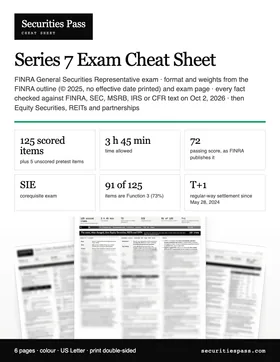
Independent study material, not affiliated with or endorsed by FINRA, the SEC, NASAA or any test-delivery vendor. Rules and figures change; confirm current requirements with FINRA before exam day.
Independent study materials. Not affiliated with, endorsed by or sponsored by FINRA, the SEC or NASAA. Exam names are used only to say which exam a product prepares for.
File last updated October 2026.