- Length
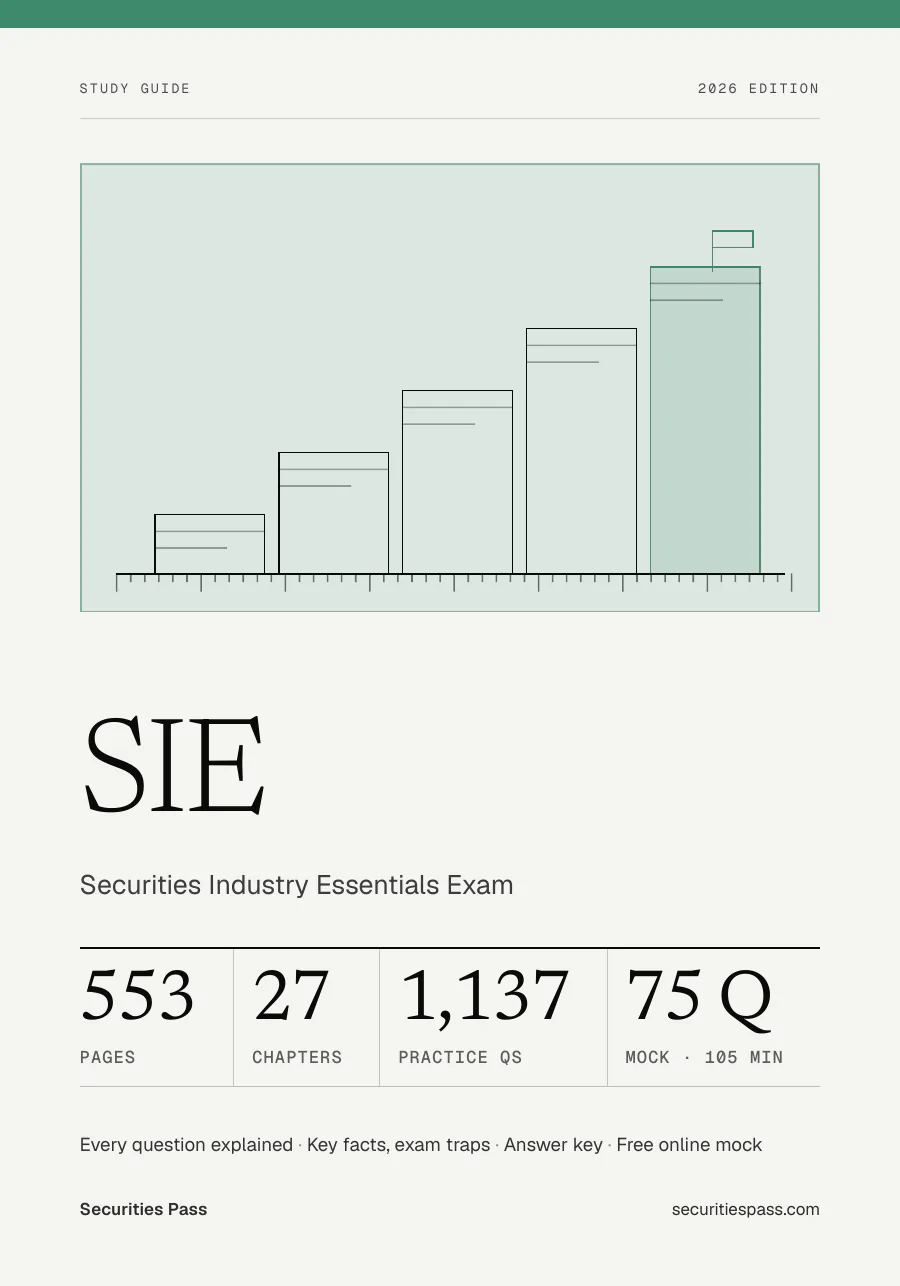
- 553 pages
- Practice questions
- 1,137
- Mock · 105 min
- 75 Q
Study guide · 2026 edition
SIE Study Guide (2026)
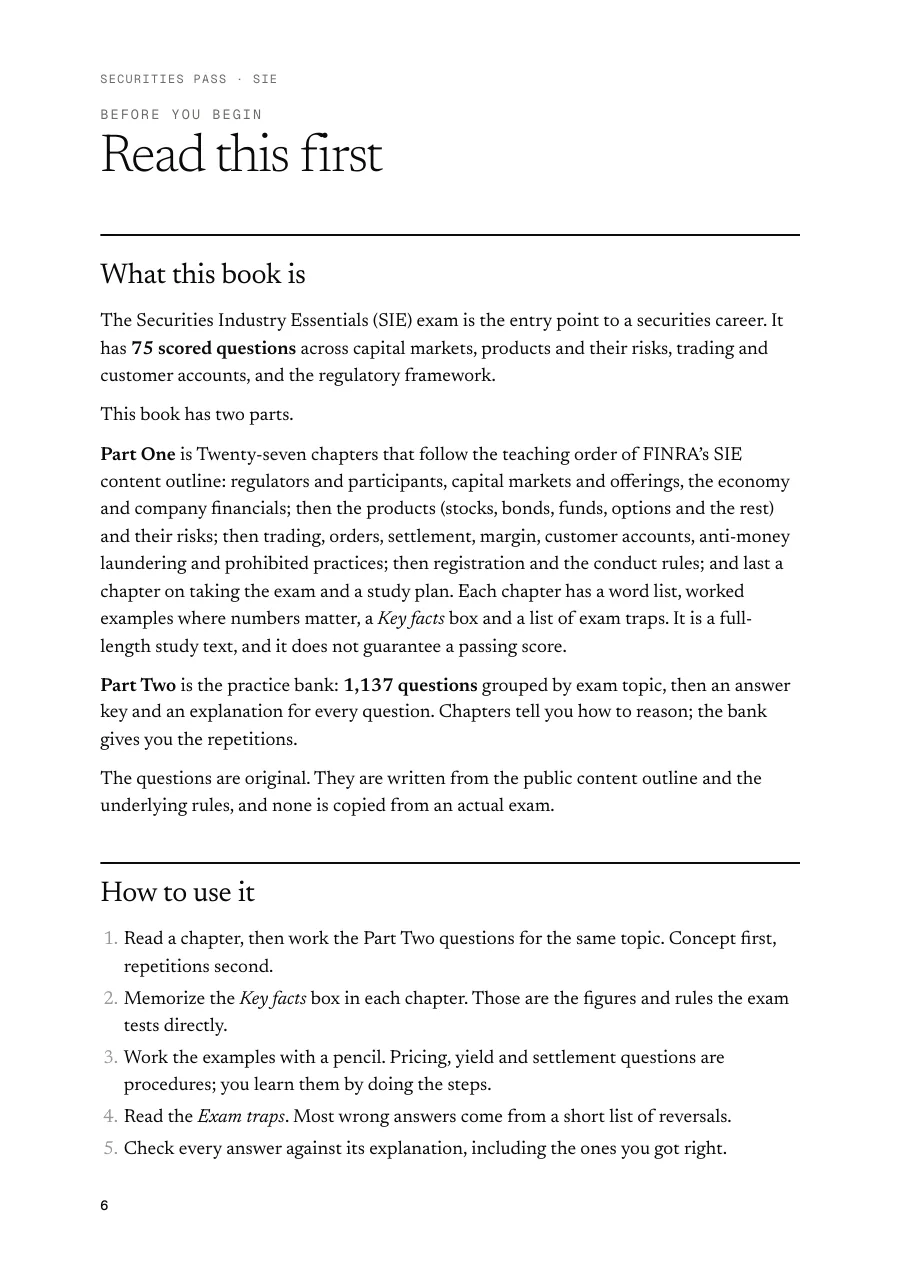
Written chapter by chapter for the SIE exam, with every practice question explained and the working shown.
- Format
- PDF + EPUB
- Length
- 553 pages
- Practice questions in the book
- 1,137
- File last updated
- October 2026
- Delivery
- Instant download after payment
Your options for this exam
- Study guide$24.99You are looking at this one
- Cheat sheet$9.99See what is inside
- BundleGuide + cheat sheet$29.99Save $4.99 vs buying separately
Contents
| Ch. | Chapter |
|---|---|
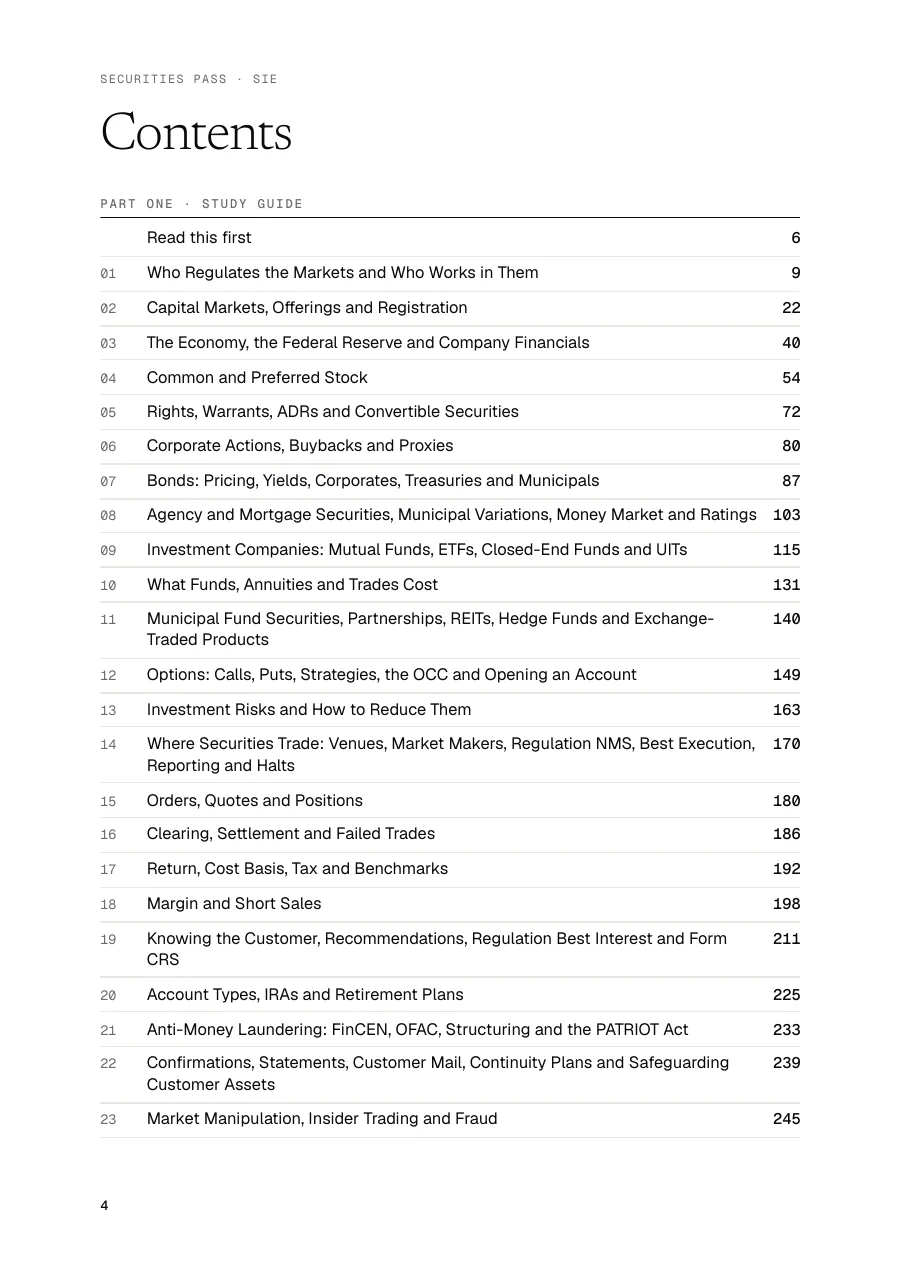
| 01 | Who Regulates the Markets and Who Works in Them |
| 02 | Capital Markets, Offerings and Registration |
| 03 | The Economy, the Federal Reserve and Company Financials |
| 04 | Common and Preferred Stock |
| 05 | Rights, Warrants, ADRs and Convertible Securities |
| 06 | Corporate Actions, Buybacks and Proxies |
| 07 | Bonds: Pricing, Yields, Corporates, Treasuries and Municipals |
| 08 | Agency and Mortgage Securities, Municipal Variations, Money Market and Ratings |
| 09 | Investment Companies: Mutual Funds, ETFs, Closed-End Funds and UITs |
| 10 | What Funds, Annuities and Trades Cost |
| 11 | Municipal Fund Securities, Partnerships, REITs, Hedge Funds and Exchange-Traded Products |
| 12 | Options: Calls, Puts, Strategies, the OCC and Opening an Account Free sample |
| 13 | Investment Risks and How to Reduce Them |
| 14 | Where Securities Trade: Venues, Market Makers, Regulation NMS, Best Execution, Reporting and Halts |
| 15 | Orders, Quotes and Positions |
| 16 | Clearing, Settlement and Failed Trades |
| 17 | Return, Cost Basis, Tax and Benchmarks |
| 18 | Margin and Short Sales |
| 19 | Knowing the Customer, Recommendations, Regulation Best Interest and Form CRS |
| 20 | Account Types, IRAs and Retirement Plans |
| 21 | Anti-Money Laundering: FinCEN, OFAC, Structuring and the PATRIOT Act |
| 22 | Confirmations, Statements, Customer Mail, Continuity Plans and Safeguarding Customer Assets |
| 23 | Market Manipulation, Insider Trading and Fraud |
| 24 | Conduct Rules: Customer Funds, Trading Practices and Cooperation with Regulators |
| 25 | Who May Work in the Industry: Qualification, Registration and Disqualification |
| 26 | Hiring, Disclosure, Reporting and Municipal Personnel Rules |
| 27 | Taking the SIE: Format, Chapter Map, Study Plan and Ten Confusions |
Chapter numbers are those printed in the book.
What’s inside
- Chapters in teaching order, written to the SIE content outline
- A question bank of 1,137 practice questions, grouped by topic, with answers and explanations
- Worked examples where the exam asks for arithmetic, and the traps named where candidates miss
- PDF (print and tab it) + EPUB (phone or e-reader)
Look inside
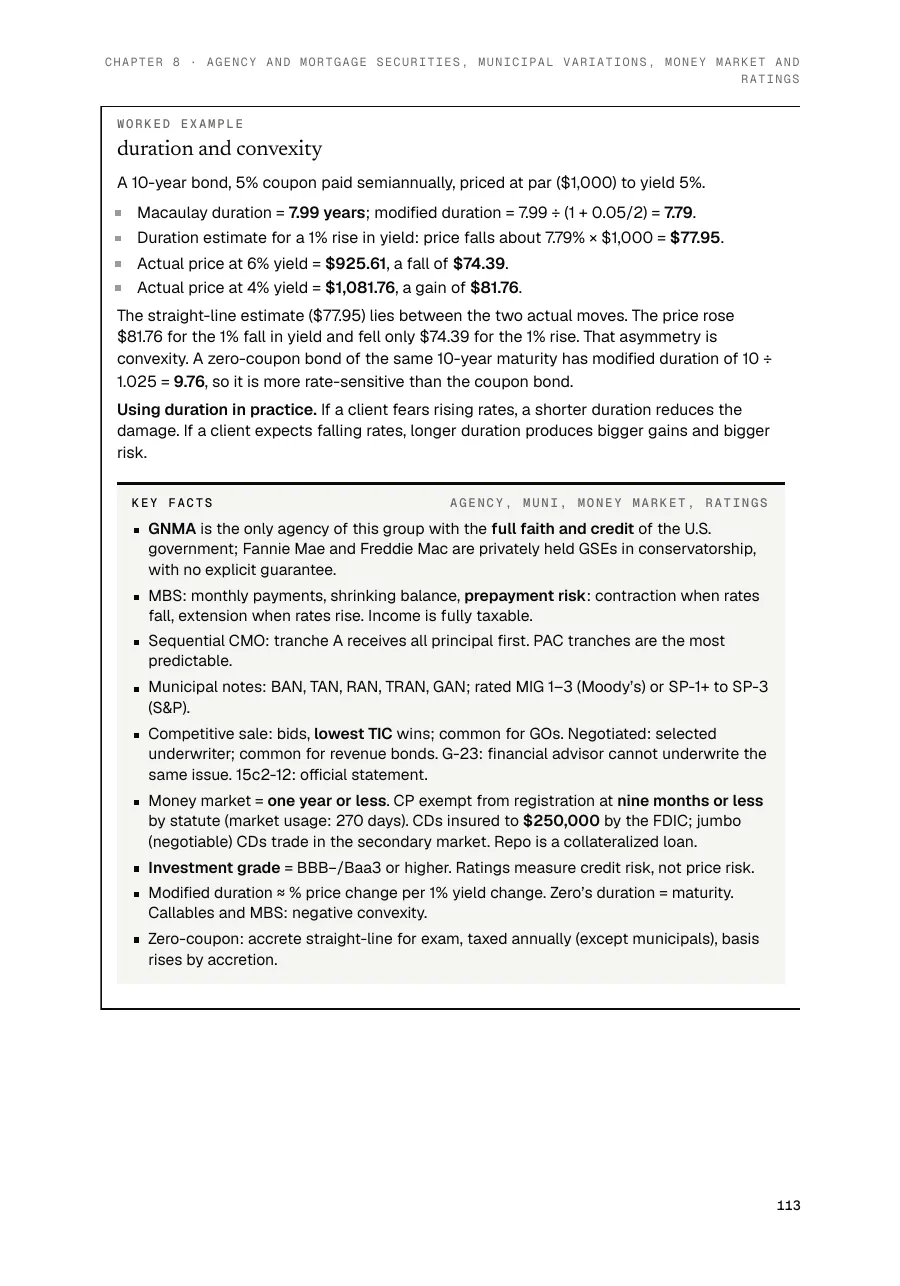
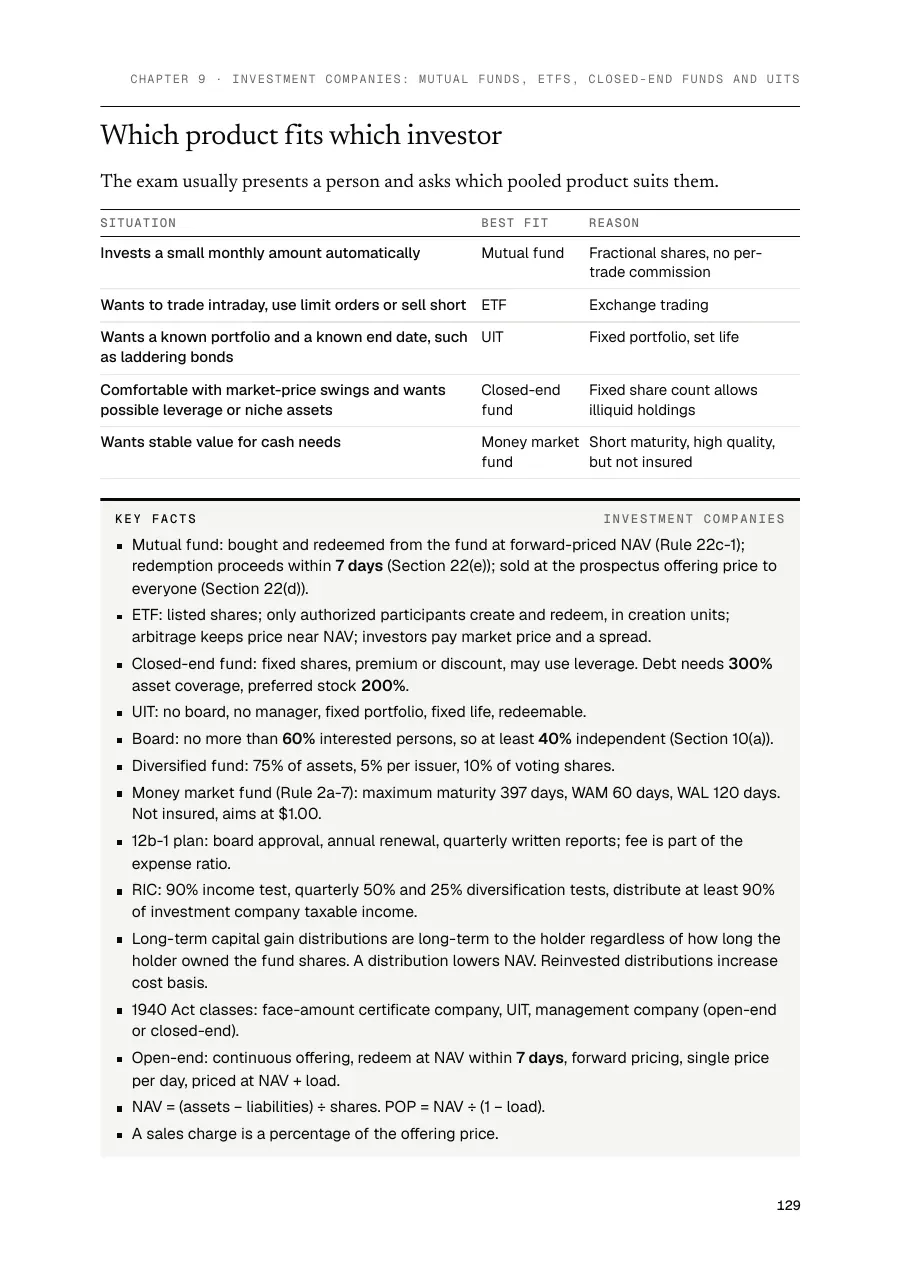
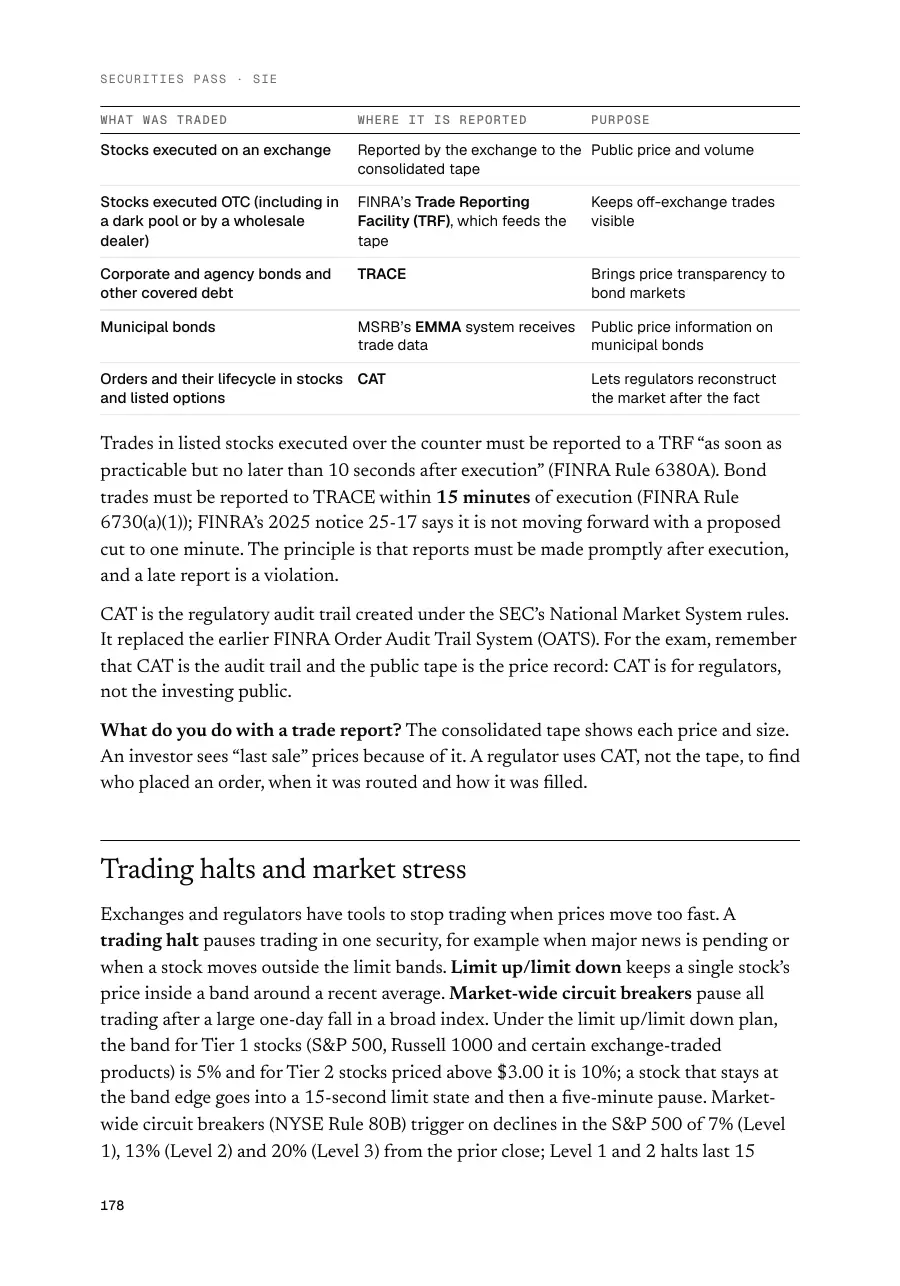
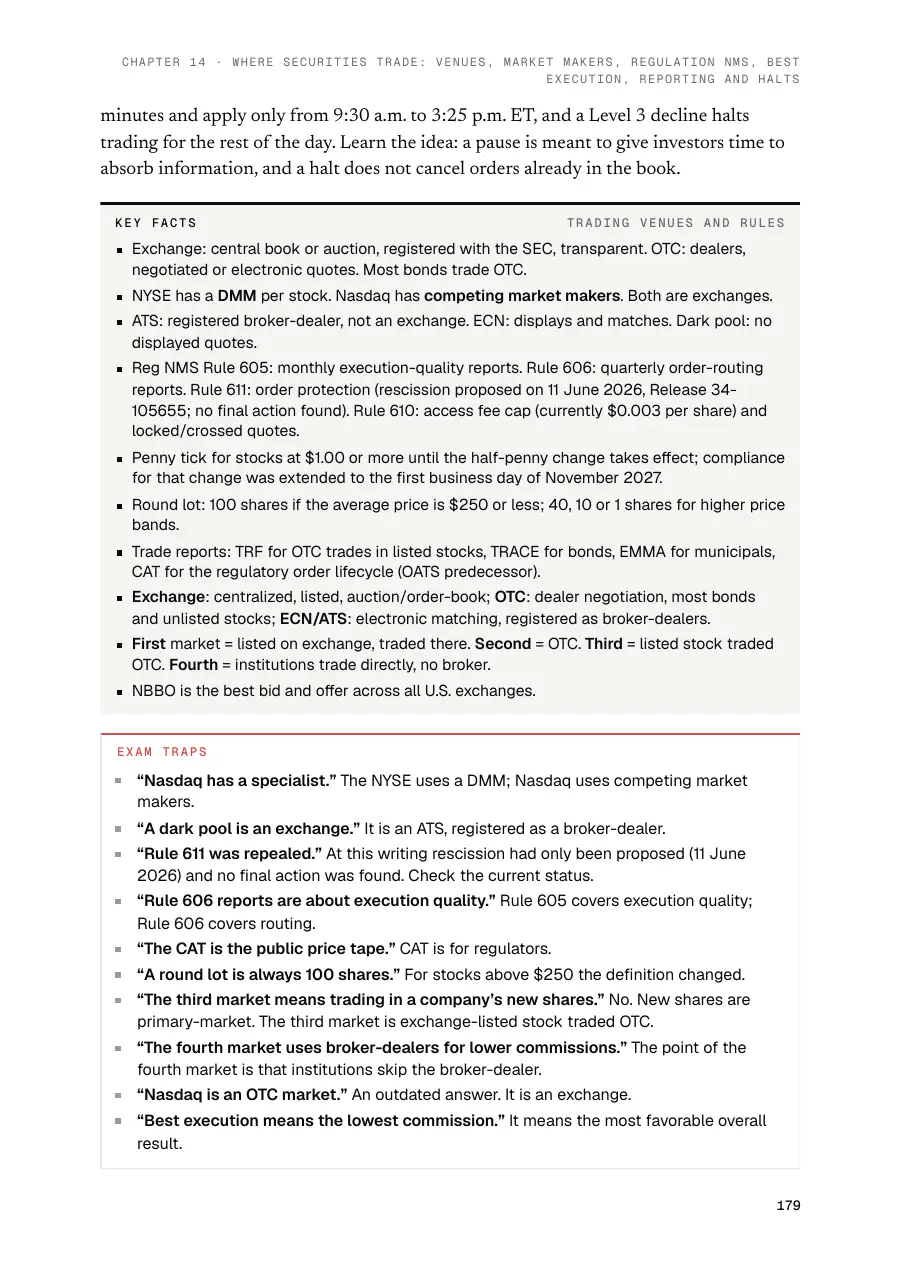
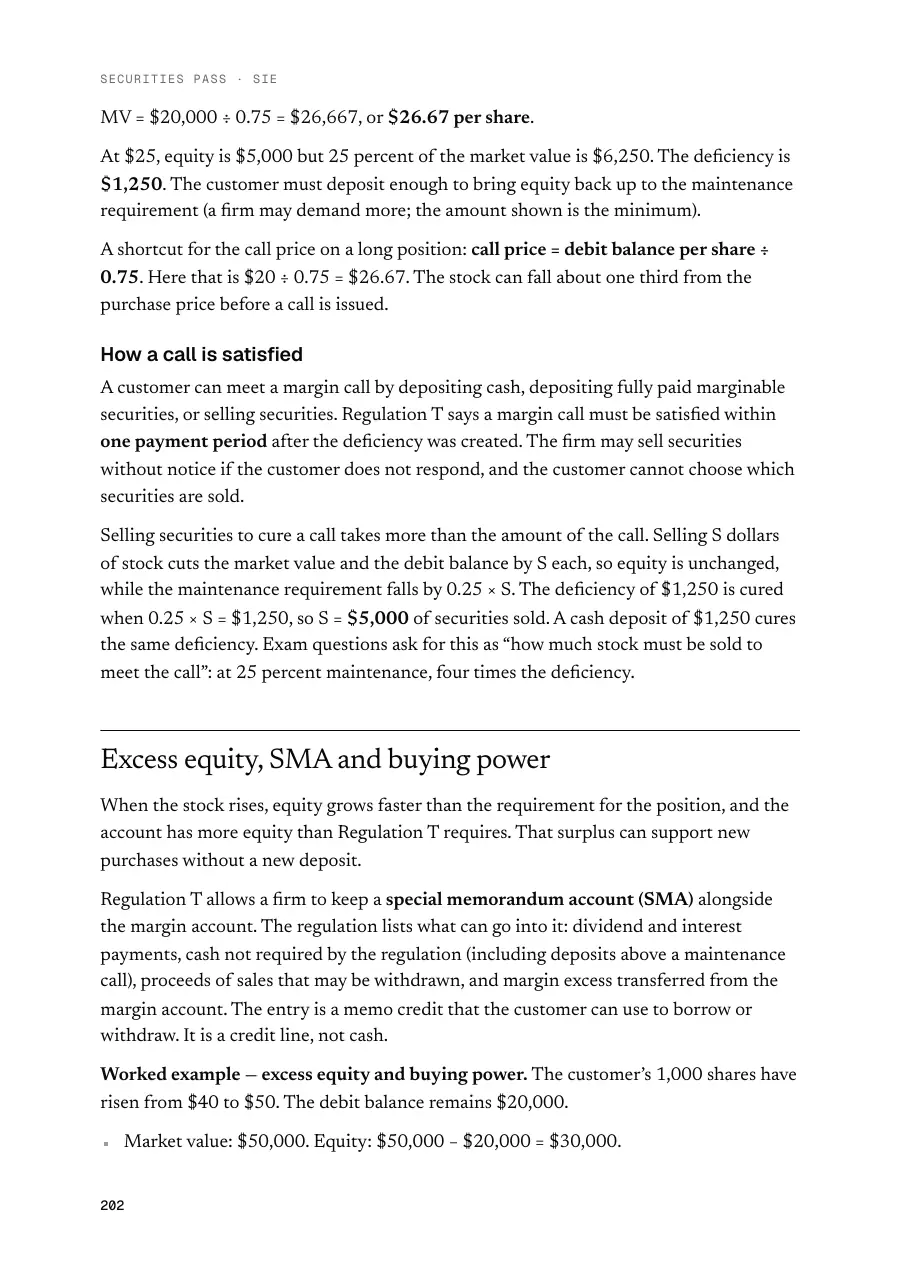
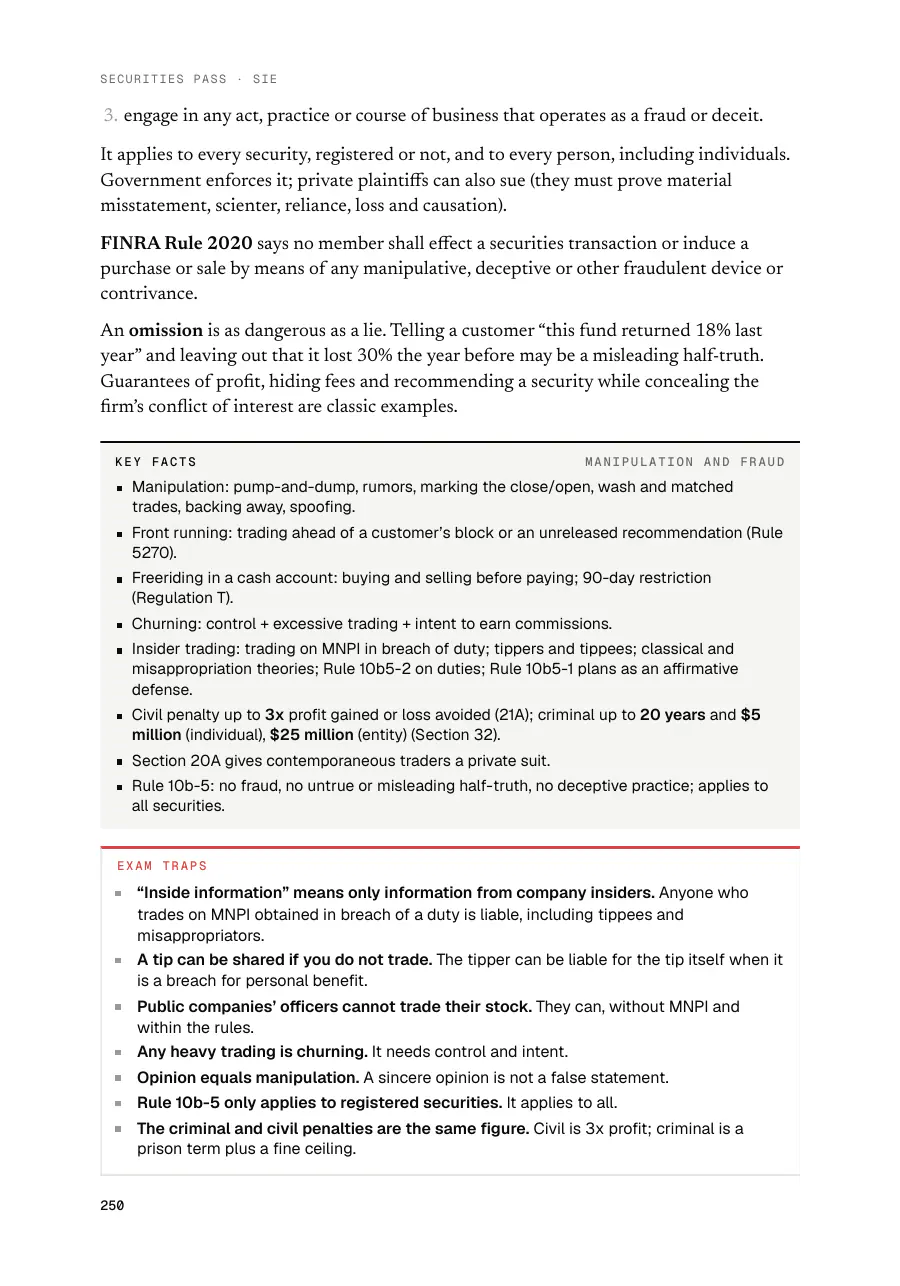
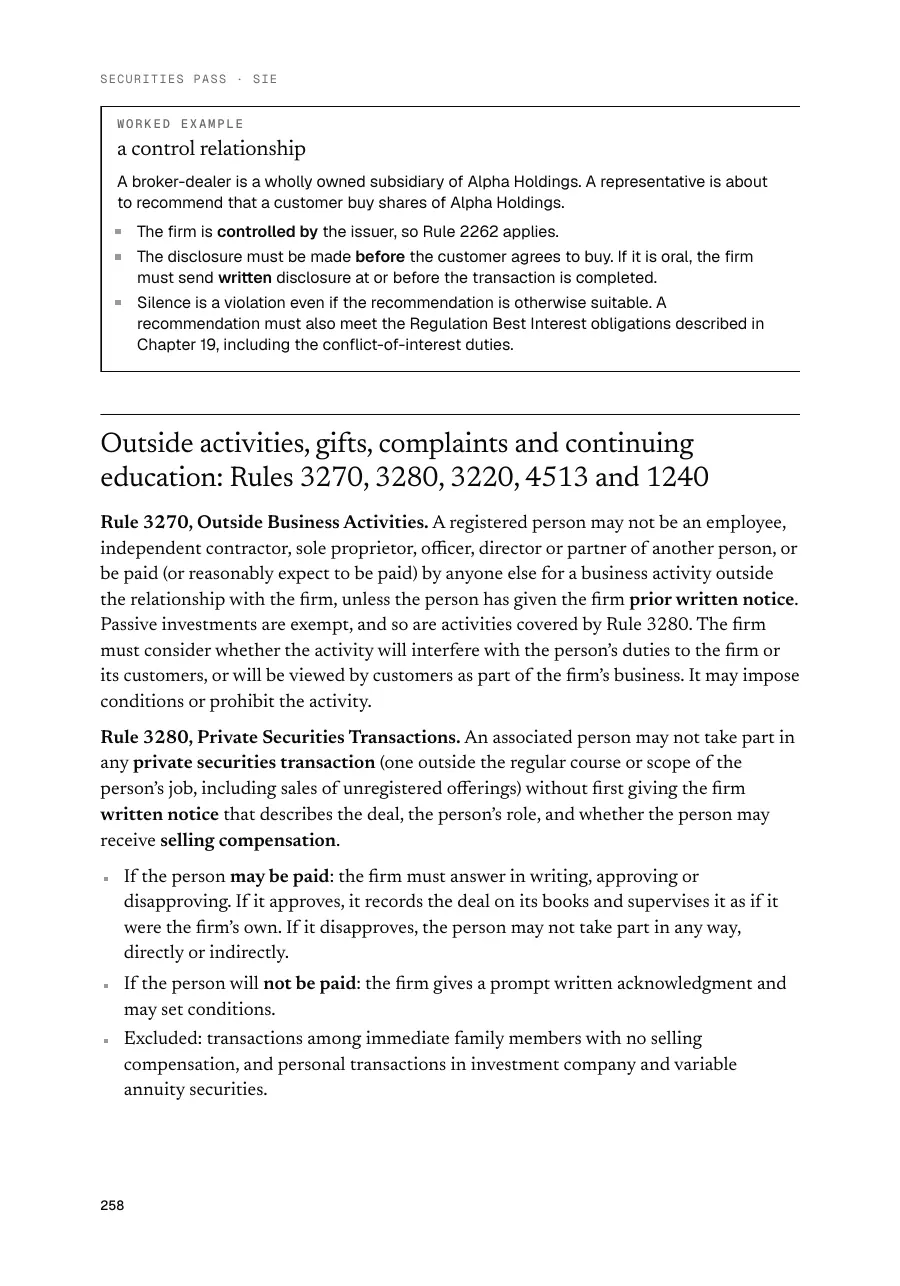
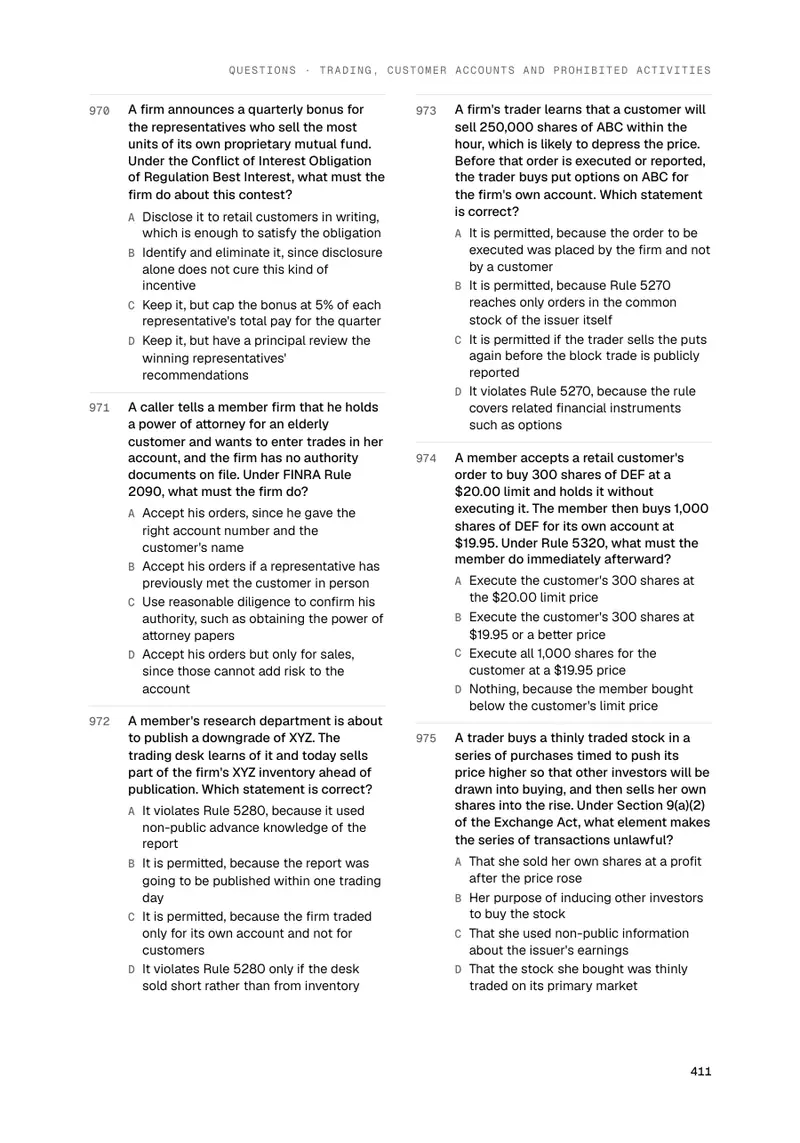
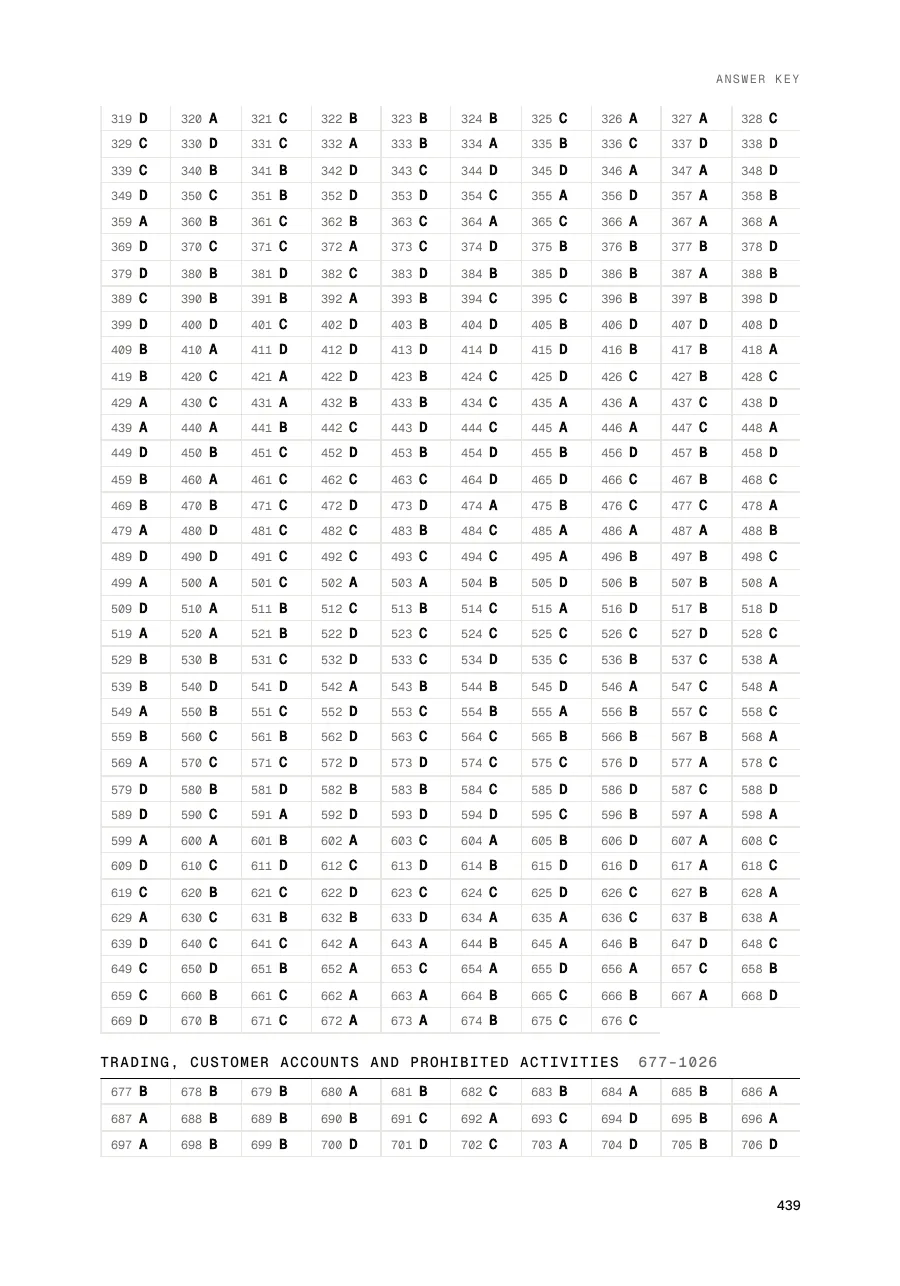
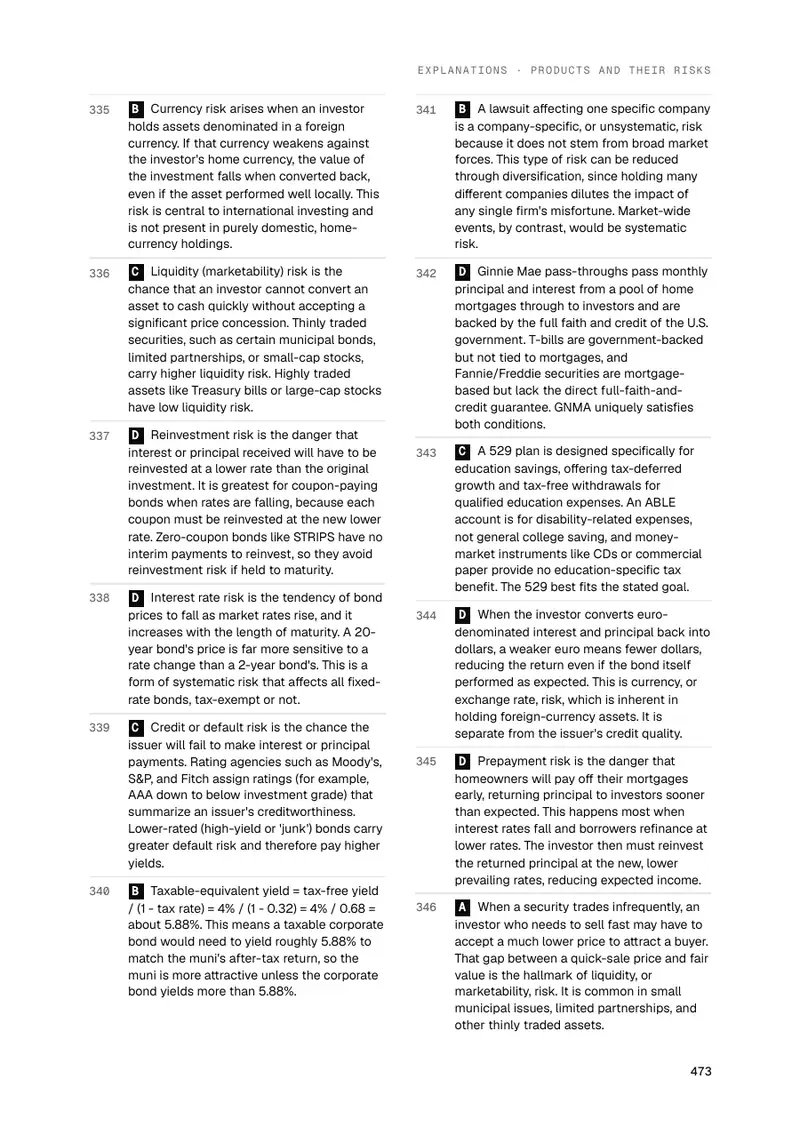
14 pages of the SIE guide, exactly as printed. Swipe, or use the arrow keys.
Free sample chapter
Chapter 12, as it appears in the book. No download and no email.
An option is a contract that gives one side a right and puts the other side under an obligation. That one sentence carries most of what you need to know about options. The buyer pays money and receives a right. The seller receives that money and takes on an obligation the buyer can call on. Once you know who holds the right and who holds the duty, the profit and loss for every position follows from arithmetic you can do on the back of the page. This chapter builds the vocabulary, walks through the four basic positions and the Options Clearing Corporation that stands behind every listed contract, shows three strategies built from the basic positions, and ends with the rules that govern how a customer is approved to trade options.
Words you need
- Option. A contract on an underlying security or index. One standard equity option contract covers 100 shares.
- Call. The right to buy the underlying at a set price.
- Put. The right to sell the underlying at a set price.
- Holder (buyer, long). Pays the premium and owns the right.
- Writer (seller, short). Receives the premium and owes the obligation if the holder exercises.
- Strike price (exercise price). The price at which the underlying can be bought or sold under the contract.
- Premium. The price of the option, quoted per share. A premium of 3 on a 100-share contract costs $300.
- Expiration date. The last day the option exists. After it, the option is worthless.
- Exercise. The holder uses the right.
- Assignment. The writer is notified that an exercise has happened and must perform.
- Intrinsic value. What the option would be worth if exercised right now.
- Time value. Premium minus intrinsic value.
- In the money, at the money, out of the money. Where the market price of the underlying stands relative to the strike.
- Covered. The writer owns the underlying (or another position that protects the obligation). Uncovered (naked) means no such protection.
- OCC. The Options Clearing Corporation, the clearing house that stands behind listed option contracts.
- ODD. The Options Disclosure Document, the booklet customers must receive before trading options.
- Clearing. The back-office process after a trade that confirms the terms, matches the buyer and seller, and makes sure both sides perform.
- Clearing agency / clearing corporation. An organization, registered with the SEC, that does clearing. It steps between buyer and seller.
- Counterparty risk. The risk that the other side of a deal will not do what it promised.
- Clearing member. A broker-dealer or bank that is a member of the clearing corporation and can clear trades through it, for itself and for customers.
What a listed option is
A listed option has standardized terms: the underlying, the strike, the expiration date and the number of shares. Only the premium is negotiated, and it is set by trading. The OCC's disclosure document states that the premium is not standardized, and that it is paid by the buyer and is not refundable. If the option expires unexercised, the premium is simply gone.
An equity option covers 100 shares of the underlying stock. That is why every dollar figure in this chapter is a per-share number multiplied by 100.
Two things make a standardized contract workable. The first is that buyers and sellers do not deal with each other. The OCC sits between them as the issuer and guarantor of every listed contract, so a holder does not need to worry about who happens to be on the other side. The second is that strikes and expirations are set by the exchange. A buyer can pick from a menu, not write a custom contract.
American and European style
An American-style option can be exercised at any time up to expiration. A European-style option can be exercised only during a limited period near expiration (in practice, at expiration). The ODD describes both, and equity options in the United States are normally American style. Many index options are European style. In short: American means any time, European means only at the end.
Equity options and index options
An equity option is settled by delivering stock: if a call is exercised, the writer delivers 100 shares per contract and the holder pays the strike price for them. An index option has no shares to deliver. It is cash settled: when it is exercised, the writer pays the holder the difference between the index level and the strike, multiplied by a stated multiplier.
Worked example — an index call. An index option has a multiplier of 100. A holder owns a call with a strike of 4,950. At exercise the index stands at 5,000.
- Intrinsic value in index points: 5,000 − 4,950 = 50 points.
- Cash paid by the writer to the holder: 50 × 100 = $5,000.
- No shares change hands.
Index options are useful for hedging or speculating on a whole market rather than one company.
LEAPS
LEAPS (Long-term Equity AnticiPation Securities) are ordinary calls and puts with long lives. Cboe describes LEAPS as listed options with expirations of up to three years. They behave exactly like other options but have more time value, because there is more time for the underlying to move. Their cost is higher for the same reason.
Calls and puts: who gets what
| Call | Put | |
|---|---|---|
| Holder has the right to | Buy the underlying at the strike | Sell the underlying at the strike |
| Writer must, if assigned | Sell the underlying at the strike | Buy the underlying at the strike |
| Holder expects the underlying to | Rise | Fall |
| Writer expects the underlying to | Stay below the strike or fall | Stay above the strike or rise |
A trick for the exam: ask who benefits. A call holder wants the stock to go up. A put holder wants it to go down. The writer of each position hopes the option expires worthless and keeps the premium. Never apply the same view to both sides of the same contract; buyer and seller always have opposite outlooks.
Another useful frame is opening versus closing. A trade that creates a new position is an opening trade. A trade that eliminates an existing position (selling a call you own, or buying back a call you wrote) is a closing trade. Most option positions are closed in the market before expiration rather than exercised.
In, at and out of the money
| Call | Put | |
|---|---|---|
| In the money | Stock price above strike | Stock price below strike |
| At the money | Stock price equal to strike | Stock price equal to strike |
| Out of the money | Stock price below strike | Stock price above strike |
In the money means the option has intrinsic value. At the money and out of the money options have none.
Intrinsic value and time value
Intrinsic value for a call is the stock price minus the strike, if positive, and zero otherwise. For a put it is the strike minus the stock price, if positive, and zero otherwise. Time value is whatever premium is left.
premium = intrinsic value + time value
Worked example — splitting the premium. A stock trades at $53.
- A 50 call is quoted at 5.20. Intrinsic value: 53 − 50 = 3.00. Time value: 5.20 − 3.00 = 2.20.
- A 50 put on the same stock is quoted at 1.10. It is out of the money, so intrinsic value is 0 and the entire 1.10 is time value.
- A 55 put on a stock at $50, quoted at 7.30: intrinsic value 55 − 50 = 5.00, time value 7.30 − 5.00 = 2.30.
Time value falls as expiration approaches and is zero at expiration. This is called time decay and it works for the writer and against the holder. At expiration, an option's price is its intrinsic value and nothing else.
The four basic positions
Every profit-and-loss question reduces to four positions. For each, find the maximum gain, the maximum loss and the breakeven. Use one stock for all four to see the pattern: XYZ trades at $50.
Long call
A trader buys one XYZ 50 call for a premium of 3 and pays $300.
- Breakeven: strike + premium = 50 + 3 = $53.
- Maximum loss: the premium, $300, if the stock is at or below 50 at expiration.
- Maximum gain: unlimited, since the stock has no ceiling.
Worked example — the long call at different prices.
| Stock at expiration | Value of call | Profit or loss |
|---|---|---|
| $45 | 0 | −$300 |
| $50 | 0 | −$300 |
| $53 | $300 | $0 |
| $60 | $1,000 | +$700 |
At $60 the call is worth (60 − 50) × 100 = $1,000. Subtract the $300 paid: profit of $700.
Between 50 and 53 the call has some value, but not enough to pay back the premium, so the trader still loses money. The breakeven is above the strike.
Short (uncovered) call
The writer of the same call received $300.
- Breakeven: $53, the same as the buyer's.
- Maximum gain: the premium, $300.
- Maximum loss: unlimited. If the stock rises to $63, the writer must deliver at 50 something worth 63 and loses (63 − 50 − 3) × 100 = $1,000 net of the premium received. At $60 the loss is $700, the exact opposite of the buyer's gain.
This is the riskiest basic position, which is why firms apply the strictest approval standards to it.
Long put
A trader buys one XYZ 50 put for a premium of 4 and pays $400.
- Breakeven: strike − premium = 50 − 4 = $46.
- Maximum loss: the premium, $400, if the stock is at or above 50 at expiration.
- Maximum gain: the stock can fall only to zero, so the gain is (50 − 4) × 100 = $4,600.
Worked example — the long put.
| Stock at expiration | Value of put | Profit or loss |
|---|---|---|
| $55 | 0 | −$400 |
| $50 | 0 | −$400 |
| $46 | $400 | $0 |
| $40 | $1,000 | +$600 |
| $0 | $5,000 | +$4,600 |
Short put
The writer of that put received $400.
- Breakeven: $46.
- Maximum gain: the premium, $400.
- Maximum loss: the stock can go to zero, so the loss is the 50 paid per share less the 4 received: $4,600.
Summary table
| Position | Max gain | Max loss | Breakeven | Wants the stock to |
|---|---|---|---|---|
| Long call | Unlimited | Premium | Strike + premium | Rise |
| Short call | Premium | Unlimited | Strike + premium | Fall or stay flat |
| Long put | Strike − premium (times 100) | Premium | Strike − premium | Fall |
| Short put | Premium | Strike − premium (times 100) | Strike − premium | Rise or stay flat |
Two patterns to memorize. First, the buyer's maximum loss equals the seller's maximum gain, and the reverse, because the premium is a transfer between them. Second, calls breakeven is strike plus premium and puts breakeven is strike minus premium.
Try the questions first, free. The SIE quick check is ten questions and takes about five minutes. It ranks your topics worst-first, so you can see what you would be paying to fix.
Take the quick checkAbout the exam itself
| Administering body | Financial Industry Regulatory Authority (FINRA) — exam delivered by Prometric |
|---|---|
| Questions | 80 questions (75 scored, 5 unscored pretest) Source: FINRA — Securities Industry Essentials (SIE) Examination Content Outline (PDF, © 2025 FINRA) |
| Time limit | 105 minutes Source: FINRA — Securities Industry Essentials (SIE) Examination Content Outline (PDF, © 2025 FINRA) |
| Passing score | Scaled score of 70 on a 0–100 scale Source: FINRA — SIE Exam and Exam Restructuring Frequently Asked Questions (FAQ) |
| Fees |
|
| Languages offered | Not published by FINRA What we read and found nothing in: FINRA — Securities Industry Essentials Exam (SIE) |
What’s included, and what isn’t
Included
- SIE study guide as a PDF and an EPUB, 553 pages
- 27 chapters, in teaching order
- 1,137 practice questions in the book, grouped by topic, with answers and explanations
Not included
- The online practice questions and timed mock exams. They stay free on this site and are not part of the download.
- The cheat sheet. It is a separate product, also sold with this one as a bundle.
- A printed copy. Delivery is a download; the PDF prints.
- A pass guarantee. The refund covers satisfaction with the file, not exam results.
- Registration for the exam. That goes through the exam administrator.
Why buy the guide when practice is free?
The practice questions and the timed mock exam are free. The $24.99 guide is the studying half: the material itself, taught in order, in a file you own, with 1,137 practice questions and explanations printed in the back.
Before you buy
- Delivery is an instant download after payment. Lost the email? Use Find my purchase and we send the links again.
- Use the PDF for print and the EPUB for a phone or e-reader.
- Read the free sample chapter above first. It is exactly how the book is written.
- 14-day money-back guarantee, for any reason. Details on the refund page.
- Rules, fees and figures change. Confirm current requirements with the exam administrator before exam day.
- If you want the guide and the cheat sheet for this exam, the bundle costs less than buying both. See the buy box.
The details
| Product | Study guide |
| Exam | SIE, Securities Industry Essentials |
| Edition | 2026 |
| Format | PDF + EPUB |
| Length | 553 pages |
| Chapters | 27 |
| Practice questions in the book | 1,137 |
| Price | $24.99, one payment |
| Refund window | 14 days |
| File last updated | October 2026 |
Questions buyers ask
Is a study guide enough for the SIE — Securities Industry Essentials exam, or do I need a course?
A book is exam review: it does not replace any education, training or experience Financial Industry Regulatory Authority (FINRA) requires before you may sit the exam, so check those requirements first. For the exam content itself, this 553-page guide teaches the material chapter by chapter with 1,137 practice questions and explanations inside, all of them in a question bank grouped by topic. A prep course adds live instruction and a set schedule; whether you need one beyond any required education is your call.
What is the cheapest way to prepare for the SIE — Securities Industry Essentials exam?
Start with what costs nothing: 1,137 practice questions on Securities Pass, with explanations and no signup. If you want it taught in one file you keep, the full study guide is $24.99 once. No subscription on any of them.
Who administers the Securities Industry Essentials (SIE) Exam?
Financial Industry Regulatory Authority (FINRA) — exam delivered by Prometric. FINRA develops and administers the SIE; candidates test either at a Prometric test center or online. Association with a broker-dealer is not required to take it, and a passing result is valid for four years. Passing the SIE alone does not register anyone: a representative-level qualification exam such as the Series 7, taken through a sponsoring firm, is still required.
How many questions are on the Securities Industry Essentials (SIE) Exam?
80 questions (75 scored, 5 unscored pretest). FINRA's content outline: each candidate's exam "consists of a total of 80 items (75 scored and 5 unscored)", the unscored pretest items unidentified and scattered through the exam. FINRA's own at-a-glance box says "Number of Questions: 75" — that is the scored count, not the number of items on screen. There is no penalty for guessing.
How long is the Securities Industry Essentials (SIE) Exam?
105 minutes. FINRA: "Candidates will be allowed 1 hour and 45 minutes to complete the SIE exam." FINRA's SIE page states the same duration. Candidates approved under FINRA's Limited English Proficiency policy receive extra time.
What is the passing score for the Securities Industry Essentials (SIE) Exam?
Scaled score of 70 on a 0–100 scale. FINRA's words: "The passing score for the SIE is 70 (on a scale of 0 to 100)." Scores are equated onto a common scale to adjust for small differences in difficulty between exam forms, so this is a scaled score and not a percentage of questions answered correctly. If you fail, FINRA's FAQ (checked 2026-10-13) requires a 30-day wait after the first and second attempts and 180 days after the third and each later attempt. FINRA has filed a cut to 15 and 60 days that is not yet in effect; see the retake block on this page.
How much does the Securities Industry Essentials (SIE) Exam cost?
$100 — SIE exam fee (FINRA, per attempt). FINRA's FAQ: "The cost of the SIE exam is $100." The SIE page's at-a-glance box shows the same figure. FINRA publishes no separate retake price, so each attempt is a new enrollment at this fee.
What languages is the Securities Industry Essentials (SIE) Exam offered in?
Not published by FINRA. None of FINRA's SIE page, content outline, SIE FAQ or Limited English Proficiency page names the languages the SIE is offered in. The only language provision FINRA publishes is extra testing time for candidates whose primary language is not English and who meet its LEP criteria — more time, not a translated exam. Securities Pass does not infer a language list FINRA has not stated.
Does the SIE — Securities Industry Essentials study guide come as a PDF?
Yes — SIE Study Guide (2026) downloads as PDF and EPUB, 553 pages. The download link is emailed the moment payment clears and does not expire.
How much does the SIE — Securities Industry Essentials study guide cost?
$24.99, once. There is no subscription and no account to create; the PDF and EPUB files are yours to keep.
Are there free SIE — Securities Industry Essentials practice questions?
Yes — 1,137 of them, free to use with no signup and an explanation on every one. This study guide has 1,137 practice questions with answers and explanations. The same free, no-account system also has practice modes (adaptive, new questions, spaced review of misses, weak-topic focus, saved, my mistakes); a timed mock exam (75 questions, 105 minutes) with a score report by topic; a 10-question readiness check (about 5 minutes); 4 study chapters; a day-by-day study plan. None of it needs this study guide.
Can I read part of the SIE — Securities Industry Essentials study guide before buying?
Yes. A full chapter is free to read on this page — not a summary of one, the chapter itself.
Is there a cheaper way to buy the SIE — Securities Industry Essentials study guide with anything else?
Yes. SIE Study Guide + Cheat Sheet (Securities Pass) is $29.99 for 2 files in one checkout — 14% less than the $34.98 those items cost bought separately today. It adds SIE — Cheat Sheet (2026). The saving is measured against the items' real current prices; there is no struck-through "original" price on this site.
Is this the official SIE — Securities Industry Essentials study guide?
No. This is an independent study guide and is not affiliated with or endorsed by the exam's awarding body. It is written from FINRA content outline / SEC, FINRA and state rules — source-checked. Always confirm current requirements with the body that issues your licence.
Related free resources
- SIE exam pageFacts and sources
- Free SIE practice questionsExplained
- SIE quick check10 questions
- SIE timed mock examFree
- Browse every SIE questionAnswers showing
- SIE topicsLearn by area
- SIE 30-day study planFree schedule
- Free SIE cheat sheet, on screenPrintable
- How hard is the SIE?Difficulty
- SIE pass rate and retakesWhat is published
The cheat sheet for this exam
Independent study material, not affiliated with or endorsed by FINRA, the SEC, NASAA or any test-delivery vendor. Rules and figures change; confirm current requirements with FINRA before exam day.
Independent study materials. Not affiliated with, endorsed by or sponsored by FINRA, the SEC or NASAA. Exam names are used only to say which exam a product prepares for.
File last updated October 2026.